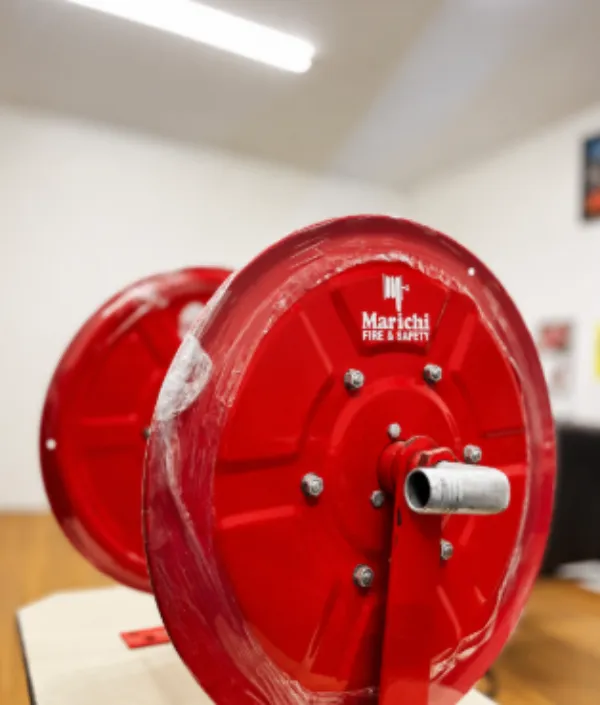
A fire emergency can escalate within minutes, making the availability of reliable firefighting equipment essential for protecting lives and property. Among the many components used in commercial and industrial fire protection, the Fire Hose Reel continues to play an important role because it enables a quick and controlled response before a fire grows beyond manageable limits.
Across Gujarat, industries, hospitals, educational institutions, commercial complexes, warehouses, and residential developments are placing greater emphasis on preventive fire safety measures. A properly installed fire hose reel system allows trained occupants or emergency personnel to begin firefighting immediately while waiting for professional firefighters to arrive. Understanding how this equipment works and where it is most effective helps organizations build stronger fire preparedness strategies.
What Is a Fire Hose Reel?
A fire hose reel is a fixed firefighting device that consists of a semi-rigid hose wound around a rotating reel. It is permanently connected to a water supply and is designed to deliver a continuous stream of water for controlling Class A fires involving materials such as:
- Paper
- Wood
- Cloth
- Cardboard
- Plastic
- Rubber
Unlike portable extinguishers that contain a limited quantity of extinguishing agent, a hose reel provides an ongoing water supply, allowing users to combat a fire for a longer duration if conditions remain safe.
How Does a Fire Hose Reel Work?
The system is relatively simple but highly effective when installed correctly.
During an emergency:
- The hose is pulled from the reel.
- The water valve is opened.
- The nozzle is directed toward the base of the fire.
- Water flows continuously until the valve is shut.
Many modern systems include adjustable nozzles that allow users to switch between a concentrated jet and a spray pattern depending on the nature of the fire.
Because the equipment remains connected to the building's water supply, there is no need to replace or recharge it after limited use in the way portable extinguishers require.
Where Are Fire Hose Reels Commonly Installed?
Fire hose reels are widely used in buildings where people, equipment, or valuable assets require continuous fire protection.
Common installation locations include:
- Manufacturing plants
- Warehouses
- Shopping malls
- Hospitals
- Schools and colleges
- Office buildings
- Hotels
- Industrial estates
- Logistics hubs
- Large residential complexes
In rapidly developing regions of Gujarat, where industrial and commercial infrastructure continues to expand, fire hose reels have become an important part of integrated fire protection systems.
Key Benefits of Installing a Fire Hose Reel
Immediate Access During Emergencies
One of the biggest advantages is that the equipment is always ready for use. Since it remains connected to a dedicated water source, valuable time is not lost searching for firefighting equipment.
Continuous Water Supply
Unlike extinguishers with limited discharge time, a hose reel provides continuous water flow as long as the supply remains available.
Easy to Operate
Most fire hose reels are designed with user-friendly controls, making them easier to operate after basic fire safety training.
Supports Early Fire Control
Many fires begin as small incidents. Quick action using a hose reel can prevent flames from spreading and reduce property damage before emergency services arrive.
Long Service Life
When installed, inspected, and maintained properly, quality fire hose reels offer dependable performance for many years.
Why Proper Installation Matters
Simply purchasing firefighting equipment is not enough. Incorrect placement or installation can reduce its effectiveness during an emergency.
Important considerations include:
- Easy accessibility
- Adequate water pressure
- Proper hose length
- Clear identification
- Compliance with applicable fire safety standards
- Regular inspection and testing
Professional design ensures that every part of the building can be reached without unnecessary delay.
Routine Maintenance Is Essential
Like any life safety equipment, fire hose reels require periodic inspection.
A typical maintenance schedule includes checking:
- Hose condition
- Nozzle operation
- Water pressure
- Reel rotation
- Valve functionality
- Leakage
- Corrosion
- Accessibility
Regular testing helps identify issues before they become serious and ensures the equipment performs reliably during an actual emergency.
Choosing the Right Fire Hose Reel
Not every building requires the same configuration. Selection depends on several factors, including:
- Building size
- Occupancy type
- Fire risk assessment
- Water supply capacity
- Local fire safety regulations
- System integration requirements
Industrial facilities often require more robust systems than small commercial buildings, while hospitals and educational institutions may have additional planning considerations to ensure accessibility and operational continuity.
Fire Hose Reel as Part of a Complete Fire Protection System
A fire hose reel works best when integrated with other fire safety measures rather than functioning as a standalone solution. Modern facilities typically combine multiple systems to create layered protection.
These may include:
- Fire alarm systems
- Fire hydrants
- Automatic sprinkler systems
- Fire pumps
- Fire extinguishers
- Emergency exit planning
- Smoke detection systems
Each component addresses a different stage of fire prevention and response, helping organizations improve overall preparedness.
Fire Safety Awareness Is Equally Important
Installing equipment alone does not guarantee effective emergency response. Employees, maintenance teams, and facility managers should understand basic fire safety procedures, know the location of firefighting equipment, and participate in regular emergency drills.
Routine training builds confidence, reduces panic during emergencies, and helps ensure that available equipment is used correctly and safely.
As industries and commercial developments continue to grow across Gujarat, investing in dependable fire protection infrastructure becomes increasingly important. Companies such as Marichi Fire and Safety contribute to this effort by manufacturing fire safety equipment designed to support a wide range of applications. When organizations evaluate equipment options through resources such as marichifiresafety.com and combine quality products with proper installation, inspection, and staff training, they strengthen their ability to respond effectively when every second counts.
Keywords